
Best Grass Types for Ripon Lawns
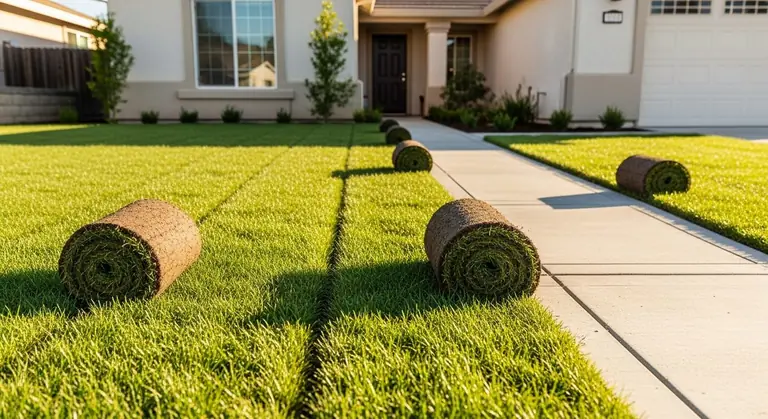
Ripon gives you three watering days in summer and one in winter, on soil that drains fast. That combination rules some grasses in and others out, whatever the label on the sod pallet says.
Start with the constraints
From March through October, even-numbered addresses water Tuesday, Thursday and Saturday. Odd-numbered addresses water Wednesday, Friday and Sunday. Nobody waters Monday, and nobody waters between 10 a.m. and 6 p.m.
From November through February the city drops to Saturday for even addresses and Sunday for odd. That is one watering day a week, for every address.
Three summer days is workable for most species. The winter drop matters less than it sounds, because grass is barely growing then. Soil is the bigger factor here.
Bermuda: strongest match for the soil and heat
Bermudagrass roots deep, which is exactly what you want on sandy loam where surface moisture disappears quickly. It thrives in Central Valley heat and handles three-day summer watering comfortably.
The trade-off is winter appearance. Bermuda goes dormant and brown from roughly late autumn, which is a reasonable price for a lawn that holds up through August but not everyone's preference.
It also spreads aggressively and wants full sun, so it is a poor choice for a shaded yard.
Tall fescue: year-round colour, more water
Fescue stays green through a Ripon winter and tolerates shade far better, which is why it is the common choice for front yards and lots with mature trees.
On sandy loam it needs attention. Fescue is shallower rooted than bermuda and dries out faster in fast-draining soil, so the three summer days need to be used well rather than casually.
Cut it high, 3.5 to 4 inches, and improve the soil with compost. Both matter more here than they would on clay.
Improve the soil before you choose the grass
This is the part people skip. On sandy loam, the difference between a lawn that copes and one that struggles is usually organic matter rather than species.
Working compost through the top 4–6 inches before installation raises water-holding capacity across the whole root zone. It benefits every option on this page, and it cannot be retrofitted easily once sod is down.
Match grass to the spot, not the property
Shaded north sides, baking west-facing strips and high-traffic play areas are different growing environments, and there is no rule saying one property gets one grass.
Fescue in shade and traffic, bermuda in full sun and heat, and for the narrow strips that irrigation never covered properly, consider artificial turf rather than fighting them every summer.
Frequently asked questions
What is the best grass for Ripon, CA?
Bermudagrass suits Ripon's heat and fast-draining sandy loam best, and handles three-day summer watering well. Tall fescue stays green in winter and tolerates shade but needs more attention on sandy soil.
Does grass dry out faster in Ripon than Modesto?
On sandy loam, surface moisture disappears faster than on the clay in many Modesto yards. Deeper-rooting grasses and compost-amended soil both help considerably.
Will bermuda grass stay green all winter in Ripon?
No. Bermuda is a warm-season grass and goes dormant and brown through winter, greening again as temperatures rise in spring.
Should I amend the soil before laying sod in Ripon?
Yes. Working compost through the top 4 to 6 inches raises how much water the root zone holds, which is the main limitation of sandy loam and cannot be added easily later.