
Ceres Lawn vs Artificial Turf: The Two-Day Watering Maths
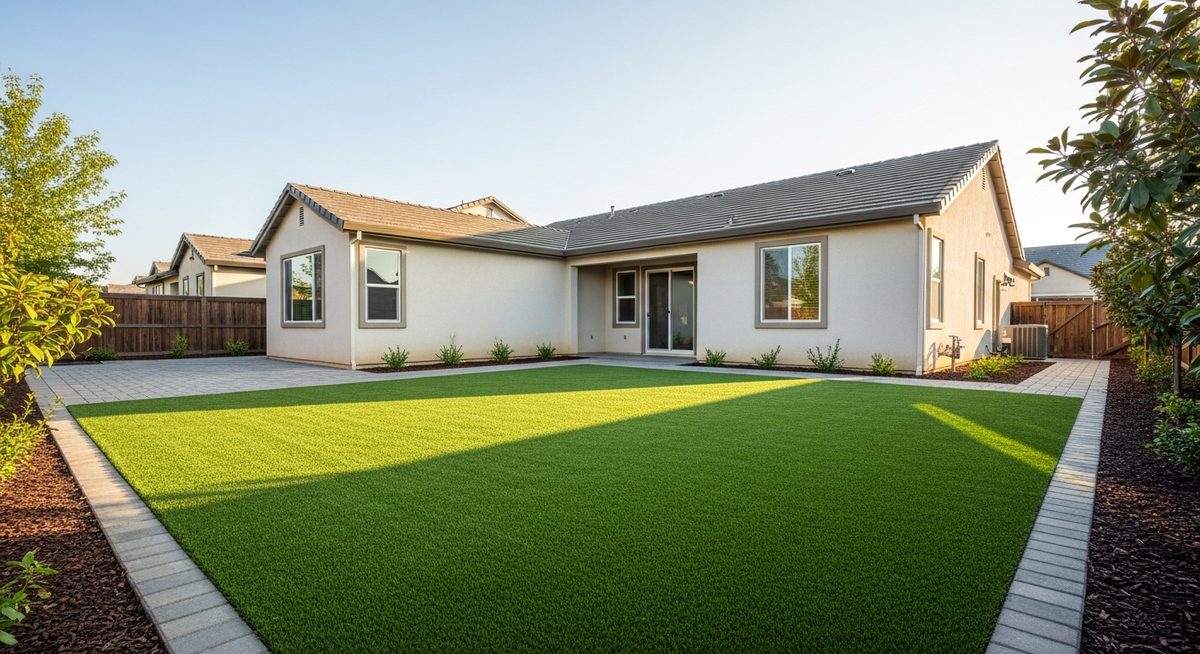
The comparison looks different in Ceres than it does in most places, because the city caps you at two watering days and offers a rebate for taking turf out. Here is an honest look at both options.
What the watering rules do to the comparison
Even-numbered addresses water Tuesday and Saturday. Odd-numbered addresses water Wednesday and Sunday. Nobody waters Monday, Thursday or Friday, and nobody waters between noon and 7 p.m. on any day.
That constraint is the whole reason this comparison is worth revisiting. In a city with unrestricted watering, keeping a natural lawn green is mostly a question of cost. In Ceres it is a question of whether it is possible on the days you are given, which for some yards and some grass types it is only marginally.
Where natural lawn still wins
It is cooler underfoot. This is not a small point in a place that runs past 100°F, and it is the main reason we steer families with young children away from full turf conversions in play areas.
It is cheaper up front, by a wide margin. It can be repaired in patches rather than sections. And it does the things a living surface does for soil and for the immediate microclimate around the house.
A well-chosen grass on decent soil, mowed high, does hold up in Ceres. It just requires the watering to be done properly rather than casually.
Where artificial turf wins
Watering days stop applying to that area, which removes both the maintenance question and the fine risk. Appearance stays constant between April and late August rather than declining through the summer.
It works particularly well in the places natural grass struggles most in Ceres: narrow parkway strips, side yards where sprinkler coverage was always poor, and small enclosed areas where a mower is awkward.
The city's turf replacement rebate reduces the up-front difference. Call Public Works at (209) 538-5732 for current terms, and confirm eligibility before removing anything.
The honest drawbacks of turf
It gets hot in direct sun. In a Ceres July an unshaded turf surface will be noticeably hotter than grass, which matters for pets and for barefoot use at midday.
It is a larger up-front cost, and repairs mean replacing a section rather than reseeding a patch. Drainage has to be done properly at installation, particularly over clay, or you get standing water in winter.
It is also not zero maintenance. It needs rinsing, brushing and debris removal, just far less of it.
The answer for most Ceres yards is partial
Framing this as all-or-nothing is what makes it a hard decision. In practice the yards we see do best with a mix.
Convert the strips and corners that were never going to survive two watering days. Keep a smaller lawn where people actually sit and play, and give it the full watering allowance instead of spreading it thin across areas nobody uses.
That approach usually costs less than a full conversion, keeps the cool usable surface where it matters, and removes the parts of the yard that were causing the frustration in the first place.
Frequently asked questions
Is artificial turf worth it in Ceres?
It depends on the area. It works well for parkway strips, side yards and hard-to-irrigate patches where two watering days a week were never going to be enough. It is less suited to play areas used at midday in summer.
Does Ceres pay you to remove your lawn?
The City of Ceres lists a turf replacement rebate among its programmes. Confirm current amounts and eligibility with Public Works at (209) 538-5732 before removing any turf.
Is artificial turf hotter than grass in Ceres?
Yes. In direct Central Valley sun an artificial turf surface gets noticeably hotter than natural grass, which matters for pets and barefoot use during summer afternoons.
Can I convert only part of my lawn?
Yes, and for most Ceres yards it is the better option. Converting hard-to-water strips while keeping a smaller usable lawn lets the remaining grass receive your full watering allowance.