
Best Grass Types for Ceres Lawns on Limited Watering
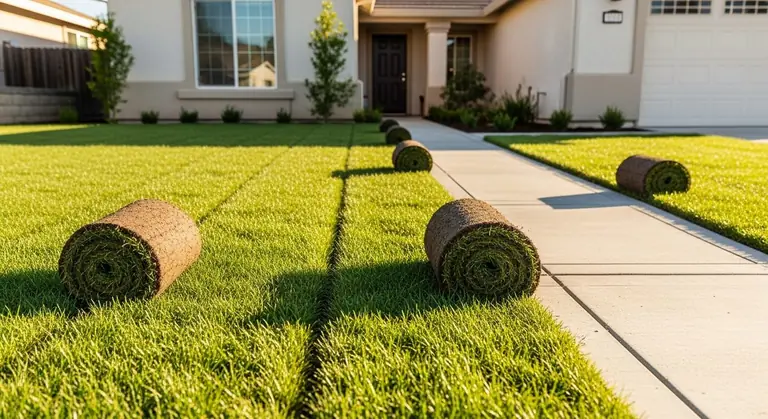
On two watering days a week, grass choice stops being cosmetic. Some species handle a Ceres summer on a restricted schedule comfortably; others need more water than the city allows you to give them.
The constraint that decides it
Even-numbered addresses water Tuesday and Saturday. Odd-numbered addresses water Wednesday and Sunday. Nobody waters Monday, Thursday or Friday, and nobody waters between noon and 7 p.m. on any day.
A grass that needs frequent light watering is the wrong grass for Ceres, regardless of how it looks in a catalogue. What you want is something that roots deeply and tolerates going several days between soakings.
Bermuda: the best match for the rules
Bermudagrass is a warm-season grass, which means it does its growing exactly when Ceres is hottest and goes semi-dormant in winter. It roots deep, handles heat well and copes with infrequent deep watering better than almost anything else that will grow here.
The trade-offs are real. It browns off in winter, which some households dislike, and it spreads aggressively into flower beds and cracks. It also wants full sun and sulks in shade.
If your priority is a lawn that survives August on two watering days, bermuda is the honest answer.
Tall fescue: greener year-round, thirstier
Tall fescue stays green through winter and tolerates shade far better, which makes it the popular choice for front yards and for lots with mature trees.
It is also the thirstier option. On two watering days through a Ceres July, fescue needs everything done right, deep soaking, high mowing, good soil, to hold colour. It will generally survive, but it will look tired in late summer in a way bermuda does not.
Cut it at the upper end of the range, 3.5 to 4 inches, and it will do considerably better.
Blends, and matching grass to the spot
Plenty of Ceres yards are better served by not choosing one answer for the whole property. A shaded north side and a baking west-facing front strip are genuinely different growing environments.
Fescue where there is shade and foot traffic, bermuda where there is full sun and heat, and neither in the narrow strips that sprinklers never covered properly anyway. Those strips are where turf replacement earns its money.
Soil does as much work as species
Most Ceres soil is sandy loam or loamy sand that drains fast, so water moves through the root zone quickly. Amending with compost before installation raises how much water the root zone holds between watering days, and that benefits every species on this list.
Aerating an established lawn in autumn does a smaller version of the same job. On a restricted schedule, soil that holds water is worth more than a species upgrade.
Frequently asked questions
What is the best grass for Ceres, CA?
Bermudagrass handles Ceres heat and a two-day watering schedule best. Tall fescue stays greener in winter and tolerates shade, but needs more water to look good in late summer.
Does bermuda grass go brown in winter in Ceres?
Yes. Bermuda is a warm-season grass and goes semi-dormant and brown through winter, greening up again as temperatures rise.
What grass grows best in sandy soil in Ceres?
Both bermuda and tall fescue will grow in sandy Ceres soil, but amending with compost before installation matters more than species choice, because it increases how much water the root zone holds.
Can I mix grass types in one yard?
Yes, and it is often sensible. Fescue suits shaded and higher-traffic areas, bermuda suits full sun and heat, and hard-to-irrigate strips are often better converted than replanted.