
The Best Grass for Modesto: Tall Fescue vs. Bermuda
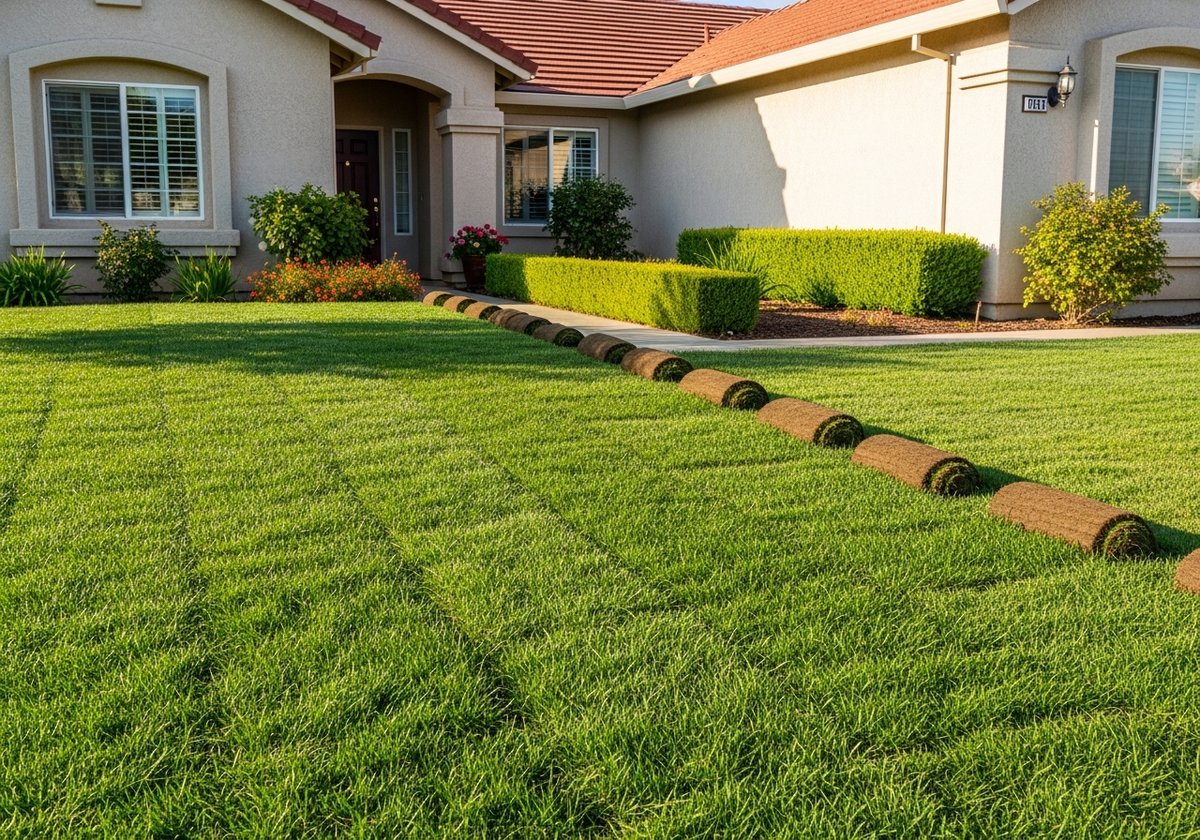
Picture two Modesto yards deciding the best grass for Modesto conditions: a full-sun corner lot in Village One where clay soil bakes hard by July, and a shaded older yard near Graceada Park under mature trees. The right answer is different for each — tall fescue for most yards, Bermuda for full-sun, high-traffic lots — and picking by the neighbor's lawn instead of your own sun, soil and water is how people end up reseeding in two years.
Updated July 2026.
If your lawn bakes in full sun on clay
That Village One corner lot is Bermuda territory. Bermuda loves heat — it grows fastest in exactly the 100°F stretches that stress every other grass — spreads aggressively to repair damage from kids and dogs, and shrugs off compacted clay better than most. The trade-offs are real:
- Winter dormancy — Bermuda goes straw-brown from roughly Thanksgiving to April. That's normal, not dead.
- It invades — flower beds, seams in concrete, the neighbor's fescue. Edging is not optional.
- Low mowing — keep it at 1–2 inches, which means frequent summer cuts.
If you've got shade and older trees
The Graceada Park yard should stay with tall fescue. It's the default lawn across older Modesto neighborhoods for good reasons: green twelve months a year, tolerates part-shade that would thin Bermuda to bare dirt, and doesn't creep into beds. Its weakness is deep summer heat — fescue survives our summers on discipline:
- Mow tall — 3–4 inches in summer; the taller blades shade the roots and cut water stress.
- Water deep, not often — the three-day schedule is actually enough when each run soaks the root zone.
- Expect some summer thinning — a light fall overseed keeps it dense.
Fescue vs. Bermuda at a glance
| Tall fescue | Bermuda | |
|---|---|---|
| Summer 100°F+ | Survives with care | Thrives |
| Winter look | Green | Brown (dormant) |
| Shade | Handles part-shade | Full sun only |
| Mowing height | 3–4 inches | 1–2 inches |
| Water on the 3-day schedule | Needs the full allowance in July | Gets by on less |
| Foot traffic | Moderate | Excellent, self-repairs |
| Contained in its space | Yes | No — spreads into beds |
On water: both live fine within Modesto's three-day summer watering schedule. Bermuda simply needs less per week, which shows up on the bill. If cutting water is the main goal, also weigh artificial turf — especially since the City has paid $2/sq ft to remove living grass (confirm the current round with the City).
Whichever you pick, fix the clay first
Grass choice matters less than what's under it. Most newer Modesto subdivisions sit on clay that compacts hard, drains slowly, and starves roots of air — the reason so many three-year-old lawns thin out no matter the variety. Before any new lawn goes down: till in 2–3 inches of compost, grade away from the house, and plan on core aeration once a year after that. On older, loamier streets you can skip the heavy amendment and just aerate. It's an hour of prep that decides whether the comparison above even matters.
When sod beats seed
For fescue: sod gives you a finished lawn in a day and skips the two vulnerable months a seeded lawn spends fighting birds, heat and weeds — in our climate, fescue sod is worth it for most people, and fall installs root best. Bermuda flips the math: it establishes fast from sod in late spring through summer heat, exactly when fescue sod struggles. Seed only makes sense here if the budget is tight and you can babysit daily watering — remember the City's 90-day new-landscape exemption exists for exactly that establishment window.
Frequently asked questions
What grass stays green all year in Modesto?
Tall fescue. It holds color through winter while Bermuda goes dormant and brown. The trade is summer care: fescue needs taller mowing (3–4 inches) and deep watering to get through July and August heat.
Which uses less water, fescue or Bermuda?
Bermuda — meaningfully less. It's the more drought-tolerant grass and gets by comfortably within the three-day watering schedule. Fescue needs its full watering allowance in peak summer to stay green.
Can I mix fescue and Bermuda in one lawn?
Not on purpose. Bermuda will invade and outcompete fescue in every sunny patch, then go dormant in winter and leave brown islands in your green lawn. Pick one per area and keep hard edges between them.